


Restore comfort, improve hygiene, and give your mouthpiece a premium, technically‑engineered new finish. Our specialist electroplating service brings worn mouthpieces back to life using repair‑grade, precision plating techniques - never cosmetic dip‑plating. Every finish is applied in ultra‑thin layers (0.5–1 micron), preserving the exact geometry and playing characteristics of your mouthpiece.
We also plate a wide range of small instrument components, including valve slides, tuning slides, valve caps, ligature plates, saxophone metal mouthpieces and flute lip plates. If you’re unsure whether a part can be plated, we’re always happy to advise.
All work is carried out in‑house by Ron, our master brass and woodwind repairer.
Why Replate a Mouthpiece?
Regular playing gradually wears down the thin metal plating on a mouthpiece. Moisture, acidity, cleaning abrasion and simple age all contribute to the finish becoming dull, patchy or worn through to the brass beneath. Once the protective layer is compromised, the mouthpiece can feel rough, harbour bacteria more easily, and lose its clean, professional appearance.
Replating restores a smooth, comfortable rim, improves hygiene, and gives the mouthpiece a premium new finish. Our repair‑grade electroplating process applies ultra‑thin, uniform layers (0.5–1 micron), preserving the exact geometry and playing characteristics while providing a durable, hypoallergenic surface.
Replating can also give your mouthpiece a unique, personalised look - whether you prefer a traditional silver finish, a warm gold rim, or a modern palladium or platinum mirror-silver finish.
Finish Options
Choose from a range of premium finishes to suit your playing style and aesthetic.
Palladium Plating
A premium finish and the structural core of our modern plating system
-
Platinum‑group metal with a bright, clean appearance
-
Completely hypo-allergenic
-
Extremely hard (250-300 Hv), helping to resist the small dinks and scratches that occur in cases and gig bags
-
Naturally tarnish‑resistant and less prone to fingerprint marking than silver
Platinum‑group metal with a bright, clean appearance -
Smooth, low‑friction feel on the embouchure
-
Provides excellent structural stability due to its density and stiffness
Smooth, low‑friction feel on the embouchure -
Ideal as both a visible finish and as the barrier layer beneath gold or platinum
Gold Plating
A warm, comfortable feel with a familiar playing response
-
Soft, smooth contact surface (20–30 Hv for 24k, 60–80 Hv for 18k)
-
Does not tarnish, although the softer metal can develop gentle wear marks over time
-
Often chosen for rim and cup upgrades
-
Great for players with a wet embouchure
-
Hypoallergenic and suitable for those with metal sensitivities
-
Applied over a palladium barrier layer, which prevents the dulling and fading that can occur when gold is plated directly onto silver.
Silver Plating
Traditional bright finish with a familiar feel
-
Smooth, comfortable rim feel
-
Ideal for players with a dry embouchure
-
Suitable for players who prefer a traditional silver finish or want to match existing instrument parts
-
Ideal for players with a dry embouchure
-
More prone to tarnish than palladium or gold
-
Can show wear more quickly due to its softer hardness (70–100 Hv)
-
Silver can be applied as a standalone finish, though many players now choose palladium for its brightness, stability, tarnish‑resistance and higher hardness
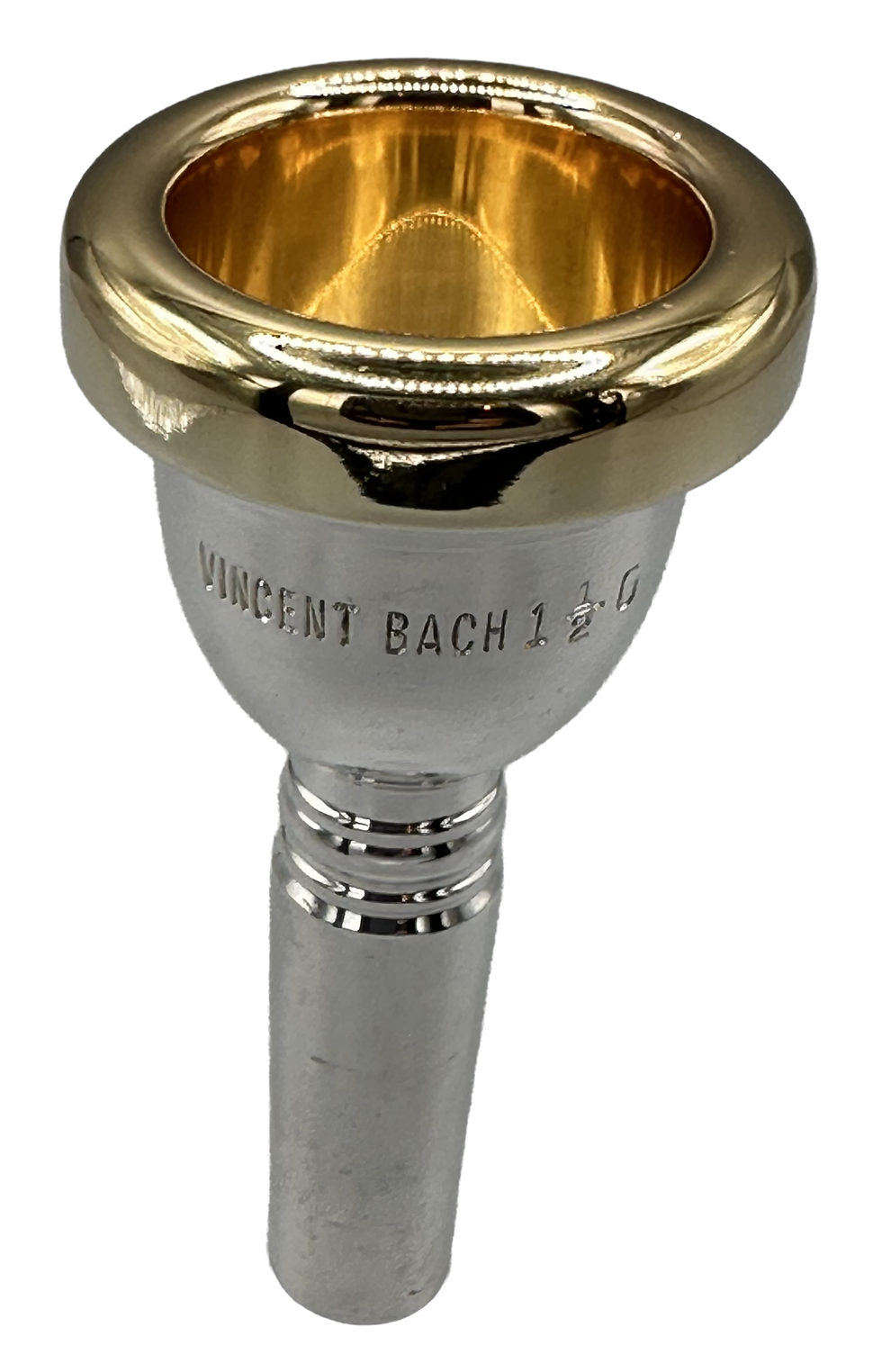
Highlight Options
-
Gold rim and cup
-
Gold or rose- gold accents
-
Two‑ or three‑tone combinations
-
Platinum rim: a dense, smooth, hypoallergenic mirror-silver finish that adds durability and stability. When applied over silver, it greatly improves tarnish‑resistance; over gold, it protects the softer metal from wear; and over palladium, it provides a premium, refined feel with excellent long‑term surface stability.
Our Plating Process

Every mouthpiece goes through a controlled, multi‑stage restoration designed to preserve the exact rim contour and cup geometry while applying a clean, durable new finish.
Assessment & Preparation
The mouthpiece is inspected for wear, dents, scratches, and any areas requiring correction.
-
We take care not to over-buff at the preparation stage so that we don't alter the rim contour and cup dimension. This means that some existing scratches and dinks may remain.
-
We can remove a dent in the shaft if needed.
Ultrasonic clean and precision surface preparation
Old residues, oils and oxidation are removed using a professional ultrasonic process, followed by controlled mechanical preparation to create a clean, uniform surface.
Electrocleaning
A deep electrochemical clean that removes microscopic contaminants and ensures perfect adhesion for the new plating layers.
Bath Electroplating
A uniform, repair‑grade metal layer (typically 0.5–1 µm) is applied using a controlled electrochemical process.
-
Palladium is used as the structural core and barrier layer.
-
Silver, gold, or platinum are applied as the visible finish if chosen. This ultra‑thin approach preserves the mouthpiece’s playing characteristics while providing a stable, durable surface.
-
Optional Brush Plating
Used for two‑ or three‑tone highlights such as gold rims, rose‑gold accents or platinum detailing.
Hand Polish
The mouthpiece is polished by hand to achieve a clean, mirror‑smooth finish without altering the geometry.
Protective Sealant
Finished with a jewellery‑grade protective sealant for improved durability and saliva resistance.
Additional Notes
-
All products used are non-cyanide and eco-friendly.

Base Finish — Palladium (default)
Palladium is our standard finish. It has a bright mirror-silver appearance, excellent durability, and does not tarnish.
Group A – cornet, trumpet, flugelhorn, Eb horn, French horn
• Palladium: £70
Group B – saxophone mouthpiece
• Palladium: £80
Group C – baritone, euphonium, trombone
• Palladium: £80
Group D – Eb bass, Bb bass
• Palladium: £100
Group E – other brass components
• Please contact us for a quote
Optional Finishes (applied over palladium)
Silver Finish (optional)
Silver can be applied over palladium for players who prefer a traditional silver look.
• Add +£10 to the palladium price
Gold Finish (18k strike layer followed by 24k top layer)
Gold is applied over palladium for a warm feel and premium appearance.
• From £45 to the palladium price
Optional Accents (any finish)
These can be added to palladium, silver, or gold:
• 24k gold rim & cup: +£20
• Silver band (for gold finish): +£15
• Rose‑gold band: +£15
Platinum Rim Upgrade
Platinum can be applied over palladium, silver, or gold for maximum durability and a bright, non‑tarnishing feel.
• Platinum rim: +£40
Notes
• All finishes are plated over palladium unless requested otherwise.
• Palladium provides brightness, hardness, and tarnish resistance.
• Silver and gold are optional aesthetic finishes.
• Decorative accents can be combined.
• Some existing scratches may remain if removing them would alter rim contour or cup geometry.
FAQs
Why do you use palladium?
Palladium is the core of our plating system because it gives a cleaner, harder, more stable finish than traditional silver or gold.
-
It looks like silver but never tarnishes, resists fingerprints, and stays bright.
-
It’s extremely hard (250–300 Hv 3–4× harder than silver and up to 10× harder than gold), so it’s far less likely to scratch or pick up dinks.
-
It’s hypoallergenic, making it ideal for players with sensitive skin. Nickel used to be the standard barrier layer in plating, but around 10–15% of people are allergic to it, and UK/European regulations now restrict its use on items that touch the skin for long periods - including mouthpieces. Palladium replaces nickel completely and safely.
Why is palladium special?
Most workshops only use palladium as a hidden technical barrier under gold. We believe we are the only workshop in the UK offering palladium both as:
-
a premium visible finish, and
-
a technical diffusion‑barrier layer inside our multi‑stage plating system.
This makes palladium a genuinely unique option for players who want a bright, silver‑like finish that never tarnishes, resists fingerprints, and is far harder and more durable than traditional silver or gold.
Performance
Palladium is denser and harder than silver or gold. This added structural rigidity can dampen high‑frequency surface vibrations, which many players feel gives:
-
a more stable feel at loud volumes
-
cleaner slotting
-
a more centred response
This is a physical characteristic of the metal - not a guarantee of improved playing.
Will plating change the dimensions of my mouthpiece?
Technically yes — but only by 0.5–1 micron, which is so small it sits inside the normal factory tolerance.
For context:
-
Human hair: 40–70 microns
-
Typical mouthpiece manufacturing tolerance (when it was made): ±5 microns
-
Our plating: 0.5 -1 micron
This means the plated mouthpiece remains well within the original manufacturing tolerance, so the geometry and playing feel remain unchanged.
Will plating change how my mouthpiece plays?
Plating does not change the internal shape of your mouthpiece, so it cannot alter the fundamental playing characteristics.
Different metals do have different densities and hardness, which affect surface vibration. Palladium is significantly denser and harder than silver or gold, and this added rigidity can dampen high‑frequency surface vibrations.
Many players describe this as:
-
a more stable feel at loud volumes
-
cleaner slotting
-
a more centred response
These effects come from the physical properties of the metal, not from any change to the mouthpiece’s geometry, and they remain subjective to each player.
Can you remove dents and scratches from my mouthpiece?
We remove dents on the shaft and tidy surface marks during preparation. However, deeper scratches on the rim or inside the cup cannot always be completely removed - as taking off too much material could change the original playing geometry.
Light marks can usually be improved. Anything that risks altering the shape is left untouched to protect how your mouthpiece plays.
Can you plate other instrument components besides mouthpieces?
Yes - we can plate small components such as tuning slides, valve slides, leadpipes, and flute lip plates.
We do not plate whole instruments. Components are priced individually (POA) depending on preparation work and finish.
How to Book
We know players don’t like to be without their mouthpiece. Our typical turnaround is 2–3 days from receipt, depending on workshop capacity.
Mouthpieces can be:
-
Dropped off at our workshop
-
Collected as part of a larger service
-
Posted to us securely (we can advise on safe packaging)
We’ll provide a clear quote before any work begins and advise on finish options and suitability.
Photos


After, with new silver plate cup and rim and rose gold body
Before
After, with new satin silver finish and a 24k rim and cup
Before
Before


Before
After, with new silver plating, a 24 k gold rim and cup and rose gold accent band


Brush Plating a flute lip plate with gold
Replating a silver mouthpiece
If your instrument also needs mechanical work, we provide brass services & repairs and woodwind services and repairs alongside plating.
Contact Us
Based near Sleaford, Lincolnshire
Visits to the workshop are by pre-arranged appointment only.
Workshop opening hours
Monday-Friday: 9:30-5:30
Band room and school visits are available by appointment within a 50‑mile radius of Sleaford. Weekend appointments can sometimes be arranged for customers who are unable to visit during the week.